
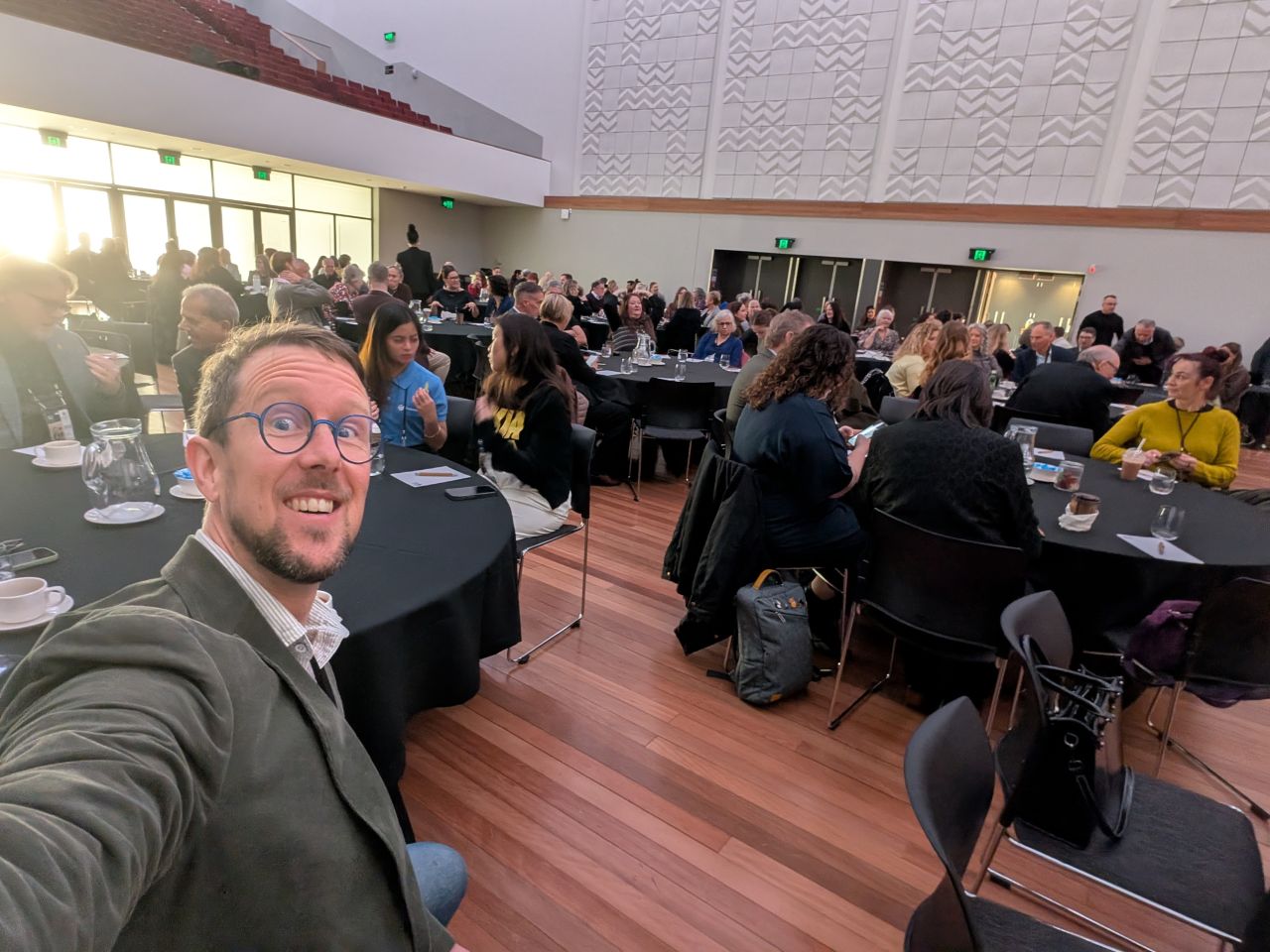
The next conference starts now
The most important thing to come out of the conference was not a particular speaker, session or activity. It was the sense of community in the room.
People talked to people they had never met before. Ideas were shared. New relationships were formed. Exhibitors joined sessions and became part of the wider conversation. Association leaders compared experiences, challenged each other and talked openly about what was working — and what wasn't.
That is what made the conference work. And it raises an important question:
How do we make that experience even better in 2027?
We have 365 days to do it.
A conference starts long before registration opens
It is easy to think conference marketing starts when the website goes live, when registrations open, or perhaps three months before the event.
I don't think it does.
The next conference starts the day the last one finishes.
Because every interaction members have with their professional community over the next 365 days helps shape whether they want to be together again next August.
A conference should not be an isolated two-day event.
It should be the culmination of a year of conversations, relationships, learning and connection.
If we get those 365 days right, people should not have to be convinced to attend.
They should already feel that they belong there.
Sometimes the smallest things create connection
One of the most talked-about parts of this year's conference happened before the programme had really begun.
The name tags.
They were deliberately different, personal and a little unexpected. But their real value was not the name tag itself. They gave people something to talk about.
Delegates looked at each other's tags, asked questions, laughed and started conversations. For some people, walking into a conference room where they don't know many others can be uncomfortable. A small conversation starter can make a surprisingly big difference.
That is worth remembering.
Creating community isn't always about another networking session.
Sometimes it is simply about making it easier for two people to say hello.
People want ideas they can actually use
The programme was built around a simple premise:
What can you take back to your association and use?
Association professionals are dealing with very real challenges — membership, governance, technology, changing expectations, financial pressures, workforce issues and the need to remain relevant.
Giving up two days is a significant commitment.
So the value has to be practical.
Delegates should leave with ideas they can discuss with their board, their team or their members.
Something they can try.
Something they can change.
Something that makes their association stronger.
That needs to remain at the heart of Associations Matter.
Surprise matters too
On day two, delegates were taken off site for an activity they knew very little about beforehand.
It disrupted the normal conference pattern. And that was the point.
There is value in not knowing every detail. There is value in experiencing something together.
And there is value in getting people out of their usual seats, into different conversations and alongside different people.
Those unexpected moments become shared stories.
They help turn a group of conference attendees into a community.
The people in the room create the conference
We were fortunate to have outstanding speakers at both ends of the programme — a strong opening and a high-energy, high-impact closing.
- The programme mattered.
- The venue mattered.
- The food mattered.
The inaugural Associations Matter Awards were a very special part of the experience.
But none of those things, on their own, create a great conference.
The people do.
Members brought their experience, curiosity and willingness to participate.
Speakers stayed and joined conversations.
Exhibitors attended programme sessions rather than remaining separated in an exhibition space.
People introduced themselves.
- They shared.
- They contributed.
- They celebrated one another.
- That is what created the atmosphere.
And that is what we need to protect as the conference grows.
Bigger isn't necessarily better
So how do you improve a conference that people already loved?
Probably not by simply adding more.
- More speakers.
- More sessions.
- More activities.
- More content.
- More can easily become noise.
The challenge for 2027 is to make the experience better, not simply bigger.
That means listening carefully to what members tell us.
What would help them make better connections?
What subjects do they need us to tackle?
What should we do differently for exhibitors and partners so they are even more integrated into the community?
Where should we create more space for conversation?
What could surprise people again?
And what can we remove?
Because sometimes improving an experience means doing less — but doing it exceptionally well.
365 days of community
Perhaps the real opportunity now is not to spend the next year building a conference.
It is to spend the next year building the community that will come together at that conference.
- Through Learning Circles.
- CEO and Executive Director conversations.
- Member introductions.
- Professional development.
- Celebrating the work associations are doing.
- Sharing ideas.
- Helping members solve problems.
And creating more opportunities for association professionals to learn from one another.
Every one of those interactions is part of Associations Matter 2027.
Our job over the next 365 days is to listen, learn and keep finding ways to bring people together.
Then, when we return to Lower Hutt on 1–3 August 2027, the conference will not feel like the beginning of something.
It will feel like the community coming together again.
And that, I think, is how we make next year even better.
Brett